

Biopsy
What Is a Biopsy?
A biopsy is a test in which a very small piece of tissue is taken from a lesion to make an accurate diagnosis, predict the future course of the disease, and determine the optimal treatment.
Collection methods include needle biopsy using a needle, surgical incisional biopsy, and techniques using an endoscope; at our clinic, we make full use of ultrasound and CT fluoroscopy (real-time imaging) to perform tissue diagnosis by accurately advancing a thin needle to lesions deep within the body.
Support for Precision Medicine (Personalized Medicine)
In recent years, cancer treatment has placed dramatically greater importance on "tailor-made treatment (personalized medicine)" that matches each patient's individual cancer characteristics and genetic mutations.
At our clinic, rather than simply identifying the cell type, we actively perform a "real-time biopsy" to carry out the latest genetic analysis.
Cancer genomic testing (genetic analysis): For patients ranging from those with advanced or recurrent cancer for whom standard treatment is difficult, to those with early-stage cancer, we perform a "same-day biopsy" to examine the current genetic status in detail.
Eligible cases: Tumors of unknown cause found on imaging studies, swollen lymph nodes, small shadows in the lung, and similar findings.
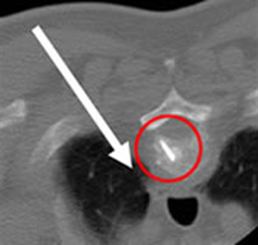
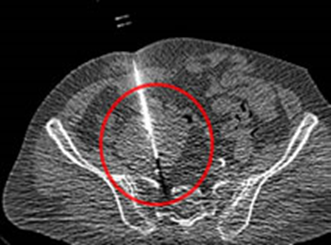
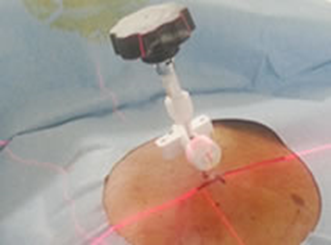
What Is CT-Guided Lung Biopsy?
CT-Guided Lung Biopsy
CT-guided lung biopsy is a test in which a thin needle is accurately inserted into a lung lesion to collect tissue, while checking a real-time cross-sectional view of the body with CT equipment.
The collected tissue is closely examined under a microscope and used to help determine the optimal treatment strategy.
- Indication: In principle, this is performed for lesions in locations that are difficult to reach with a bronchoscope (camera), or when sufficient tissue could not be obtained by bronchoscopy.
- Duration: Usually performed as a same-day procedure, but depending on the situation, a one-night hospital stay may be required.
- Support for genomic analysis: In addition to standard tissue diagnosis, we can also examine cancer gene mutations in detail upon request.
- Time required: Approximately one hour from entering to leaving the examination room.
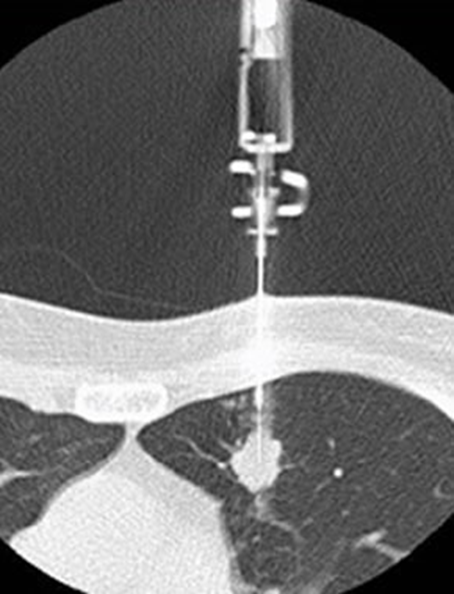
(Reference) Yasumoto T., et al., Guidelines on CT-Guided Lung Biopsy Technique, edited by the Japanese Society of Interventional Radiology
https://www.jsir.or.jp/about/guide_line/ct_guide
What the Procedure Involves
- Preparation: In the CT room, you will be positioned (lying on your back, face down, etc.) according to the location of the lesion.
- Anesthesia: The skin is disinfected and local anesthesia is administered.
- Collection: Tissue is collected while confirming on CT images that the needle tip has reached the lesion.
※If you have an allergy to disinfectants or anesthetics, please inform us in advance.
※If you feel pain or discomfort during the procedure, please do not hesitate to tell our staff.
After the Procedure
After the procedure, the puncture site is covered with gauze, and you will rest in a bed at the clinic for about one to two hours. The procedure is complete once we have confirmed that there are no problems with your recovery.
About Complications
While we take every precaution to ensure safety, the following complications have been reported.
- Mild complications:
- Pneumothorax: A condition in which air leaks from the lung. Minor cases occur in about 20–40% of procedures, while severe cases requiring treatment occur in about 2–5%.
- Blood-tinged sputum: Blood may occasionally appear mixed in with sputum.
- Serious complications (extremely rare cases):
- Air embolism (less than 0.1%), tension pneumothorax (0.1%), pulmonary hemorrhage (0.05%), hemothorax (less than 0.1%), and others have been reported.
Our clinic maintains a comprehensive system in which the attending physician and specialists in each field can respond promptly to these complications.
If you have any concerns, please feel free to consult our physicians or staff at any time.


