Overview of IVR (Interventional Radiology)
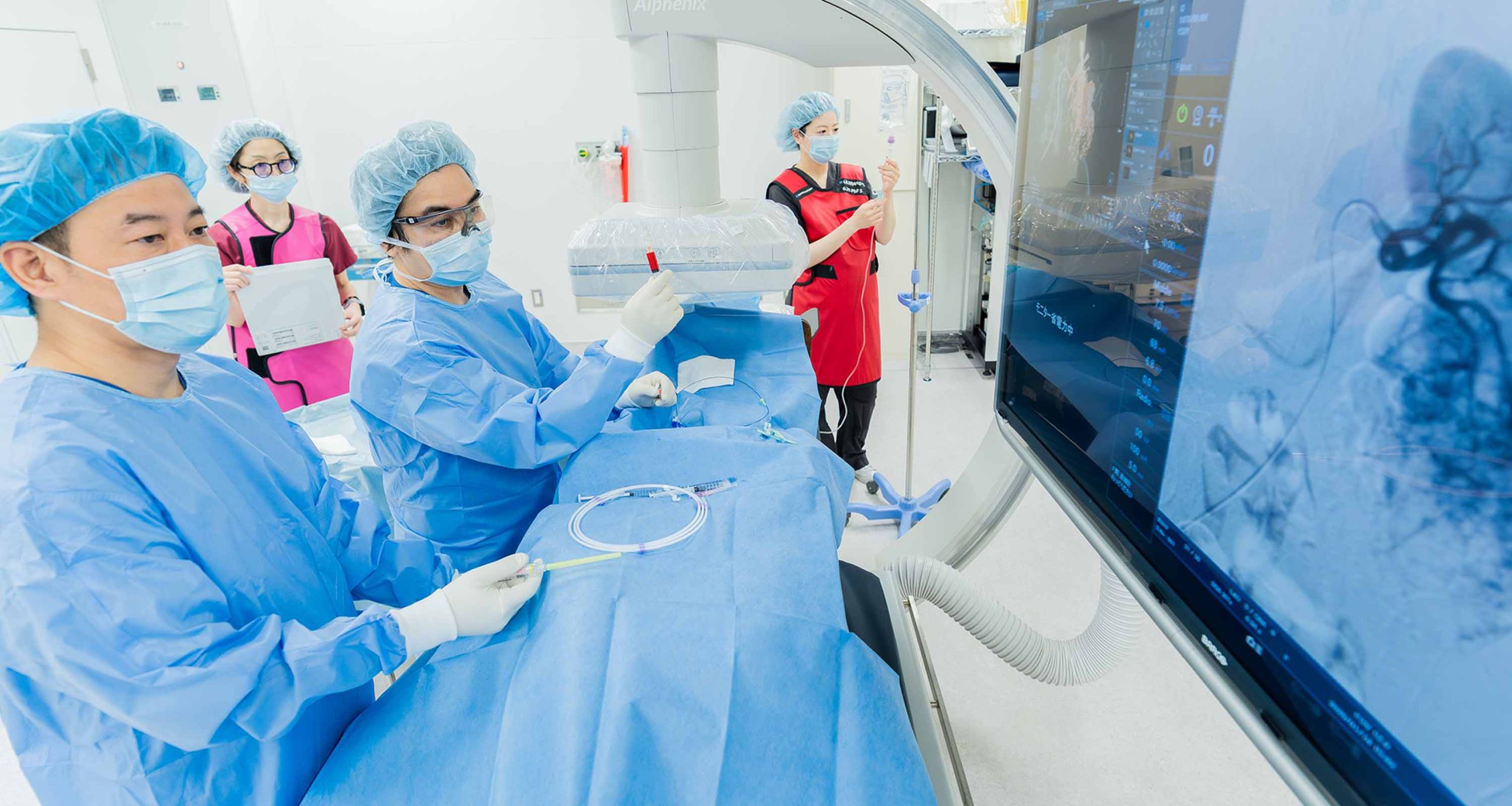
IVR (interventional radiology) is also known as image-guided treatment. It is a new system of treatment in which lesions are approached using catheters (thin tubes) or needles while the inside of the body is monitored in real time with imaging equipment such as X-ray fluoroscopy, angiography, ultrasound, and CT.
Its greatest feature is its minimal invasiveness: it does not involve large surgical incisions and, in many cases, does not require general anesthesia. Because the burden on the body is very small and only the lesion can be targeted with precision, same-day treatment and shorter hospital stays are also possible.
Even for elderly patients or those with concerns about their general condition, we propose the most suitable treatment based on appropriate imaging diagnosis and the course of previous treatments.
Classification: Vascular IVR and Non-vascular IVR
IVR is broadly divided into "vascular" and "non-vascular" procedures according to the method of approach.
Vascular IVR
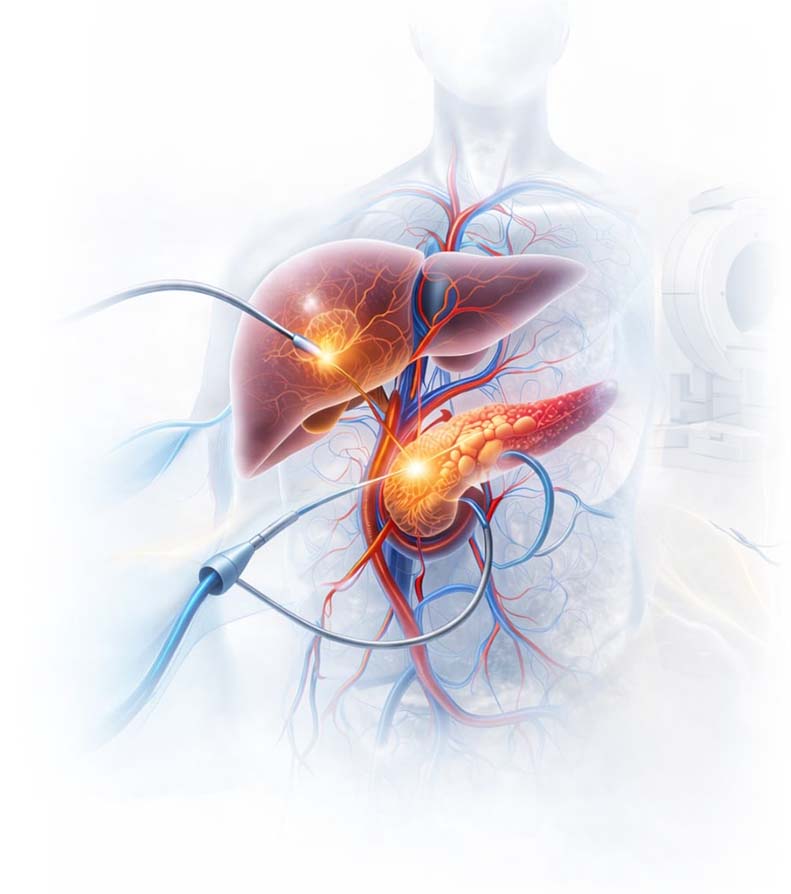
Treatment is performed by inserting a catheter (a thin tube passed through a blood vessel), mainly from vessels in the groin or upper limbs. Working through the blood vessels, we can address a wide variety of conditions: occluding the vessels that feed tumors arising anywhere in the body—such as the liver, kidneys, lymph nodes, breast, peritoneum, and pelvic organs (uterus, bladder, prostate)—with embolic materials such as small particles or with balloon catheters; injecting high-concentration anticancer drugs; and widening narrowed vessels and placing metallic mesh tubes called stents.
Non-vascular IVR
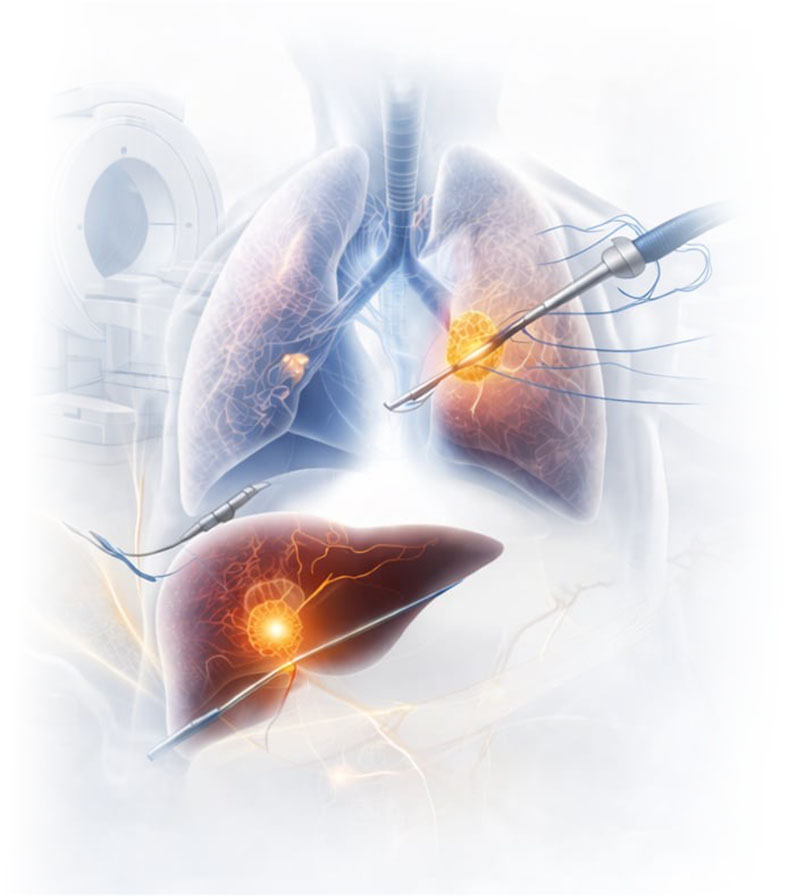
These procedures are based on a technique called puncture, in which a needle is inserted directly into the lesion while its position is confirmed on images, mainly using real-time CT imaging (CT fluoroscopy) or ultrasound. They include local cancer treatment by radiofrequency ablation (RFA) (lung, liver, kidney, breast, lymph nodes, intra-abdominal, pelvic, etc.), as well as drainage treatment, in which a tube is placed for diseases of non-vascular "ducts" such as the biliary tract and gastrointestinal tract. Biopsy, in which tissue is collected while the position is confirmed with ultrasound or CT, is also part of non-vascular IVR and important for accurate diagnosis.
Costs of IVR and Insurance Coverage
IVR treatments include those covered by public health insurance ("insured medical care") and those paid entirely out of pocket ("non-insured medical care"). Coverage varies depending on the disease, the treatment, the site of the lesion, and other factors, so please contact us directly for details.